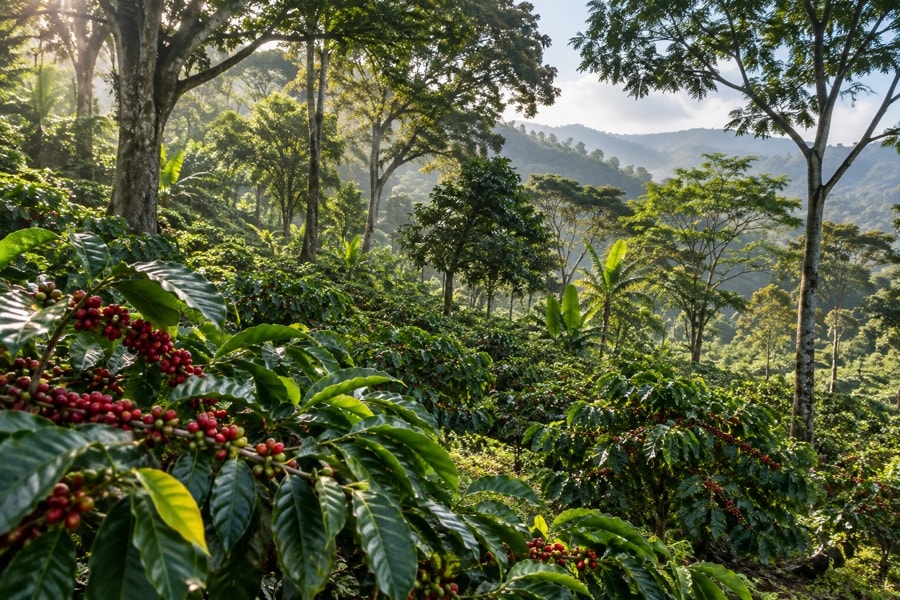
The label on a coffee bag can point toward a landscape far from western North Carolina. Many migratory birds spend different parts of the year in different countries. A farm that retains a diverse tree canopy can provide cover and food along those seasonal journeys while continuing to produce a crop.
What “shade-grown” means
Coffee is a shrub. On some farms it grows beneath taller trees; on others, most overhead vegetation has been removed. Shade is not a single recipe. A few trees of one kind create a different habitat from multiple layers of native or useful trees, shrubs and ground cover.
The strongest habitat value generally comes from structural variety: trees of different heights, a broad canopy, flowering and fruiting plants, leaf litter and fewer chemical inputs. Those features can support insects and other food resources as well as shelter. A shaded farm is still a working agricultural system, not an untouched forest, so claims should stay proportional to what the farm actually maintains.
Why tree cover matters to birds
Birds use vegetation vertically. Some forage near the ground, some search leaves and bark in the middle layers, and others move through the canopy. More layers create more possible niches. Shade trees can also moderate heat, protect soil and connect patches of natural vegetation across a cultivated landscape.
The Smithsonian’s Migratory Bird Center overview describes ecological benefits associated with shade-grown coffee and explains why tree diversity and canopy structure matter. It is a useful starting point for understanding the link without treating every shade claim as equivalent.
Read beyond the front label
“Shade-grown” alone may not tell a buyer how much shade exists, which trees are present or how the claim was evaluated. Look for a clearly identified standard, an independent certification and enough detail to understand its habitat criteria. Terms that sound similar may measure different things.
Origin also matters, but it does not replace production information. A named country or region says where beans were grown, not how the farm was managed. When details are absent, uncertainty is the honest conclusion.
Make the choice practical
A useful approach is to choose one well-documented coffee that fits the household budget and brew method, then buy an amount that will stay fresh. Reducing waste is part of the decision. Ask a roaster what a stated certification verifies, and favor answers that describe farm practices rather than relying on a vague green label.
No single purchase protects an entire migration route. Yet recurring demand can reward farms that retain useful vegetation. It is one modest connection between daily life and the habitat network birds use across a year.
Keep the comparison manageable. Save the name of the standard and review its published criteria instead of trying to judge an entire farm from package art. If the information changes, update the choice without treating the earlier purchase as a personal failure. The purpose is informed, repeatable attention to habitat, not a claim of purity. A short note beside the usual shopping list can preserve the reason for the choice better than trying to remember every seal at the store. Recheck the standard occasionally, because published requirements can develop over time.