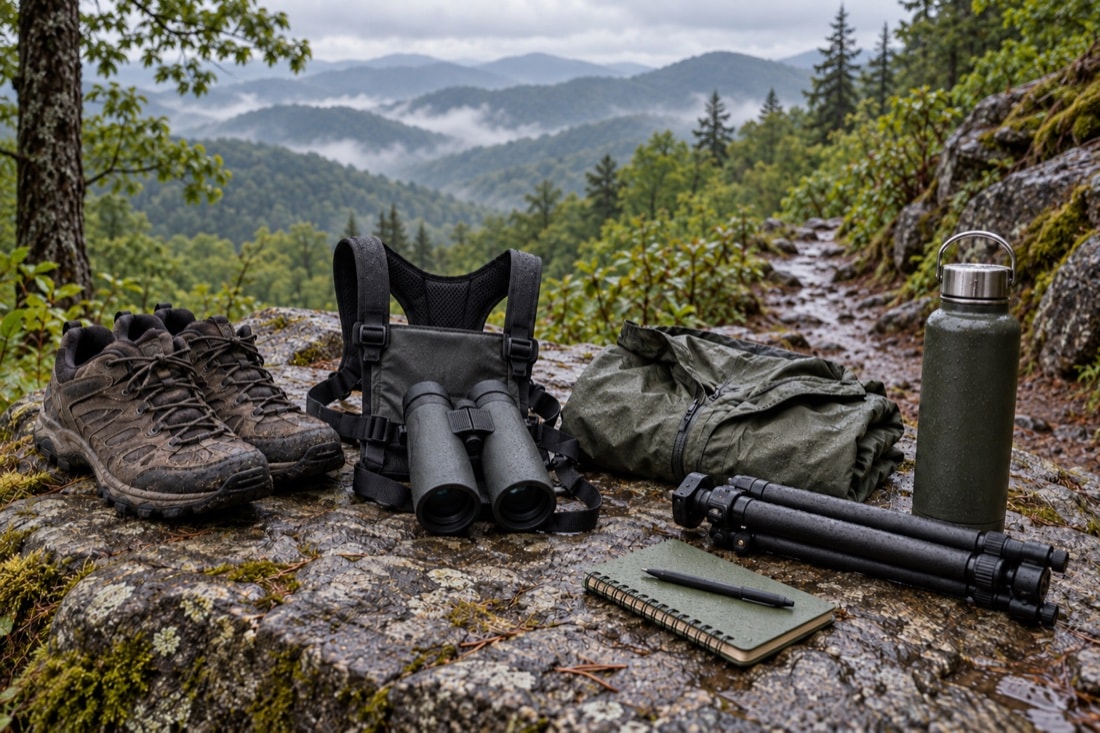
Birding in the Southern Appalachians can move quickly between cool shade, exposed sun, damp ground and wind. Elevation makes conditions at a destination different from those in town. Fieldcraft is the practical habit of preparing for those changes while keeping the outing simple.
Plan for the place you will reach
Check the responsible land manager’s current information before leaving. Roads, trails and facilities can change with storms, maintenance and season. At higher elevations, bring a layer for conditions cooler and windier than the starting point suggests. The National Park Service winter recreation guidance shows why Parkway travel deserves specific seasonal planning.
Share the route and expected return time with someone who is not on the outing when heading into a remote area. Carry water, a small light and an offline map. A charged phone is useful, but it is not a substitute for knowing the route.
Carry a quiet, balanced kit
Use only what supports the outing: binoculars, notebook, water, weather layers and any essential personal items. Place frequently used objects where they can be reached without repeatedly taking off a pack. Secure loose bottles and clips so they do not knock together while listening.
A binocular harness can distribute weight differently from a narrow neck strap. Adjust either system so the instrument rests without pulling the head forward. Fit and comfort vary by person; test the setup during a short walk before relying on it for a full day.
Look up without staying locked there
Canopy watching often means repeated upward viewing. Move the eyes first, bring binoculars up to meet the gaze and support the elbows when a trunk or railing offers a stable position. Lower the binoculars between searches. Short resets help maintain a relaxed stance and make it easier to notice birds moving at other heights.
Shift positions instead of holding one awkward angle. A few steps may open a better view through leaves. Keep those steps on the established route and check footing before looking overhead, especially near roots, wet boards and uneven stones.
Use a repeatable pace
Alternate slow movement with deliberate listening stops. At each pause, let nearby sounds settle, scan from ground to canopy and make brief notes before continuing. This rhythm is often more productive than constant walking and less tiring than holding binoculars up through every uncertain sound.
Eat and drink before fatigue becomes the main feature of the outing. Turn back while enough time and attention remain for the return route. A shorter complete visit produces better notes than an overextended day finished in a rush.
Let weather change the plan
Fog may reduce distant views while making nearby sound more important. Wind shifts activity toward sheltered edges. Heat favors earlier or more shaded observation. Thunder, flooding, ice and falling limbs are reasons to leave, not field challenges to overcome.
Afterward, dry equipment, check footwear and record what the conditions taught you. Over several outings, those notes become a personal planning guide for particular elevations and seasons.
Keep the debrief short enough to repeat: what was useful, what stayed unused and what caused distraction. Adjust one part of the kit or route for the next outing. Small revisions create a personal system without turning preparation into a collection of equipment. The best setup is the one that fades into the background while attention stays on weather, habitat and sound.