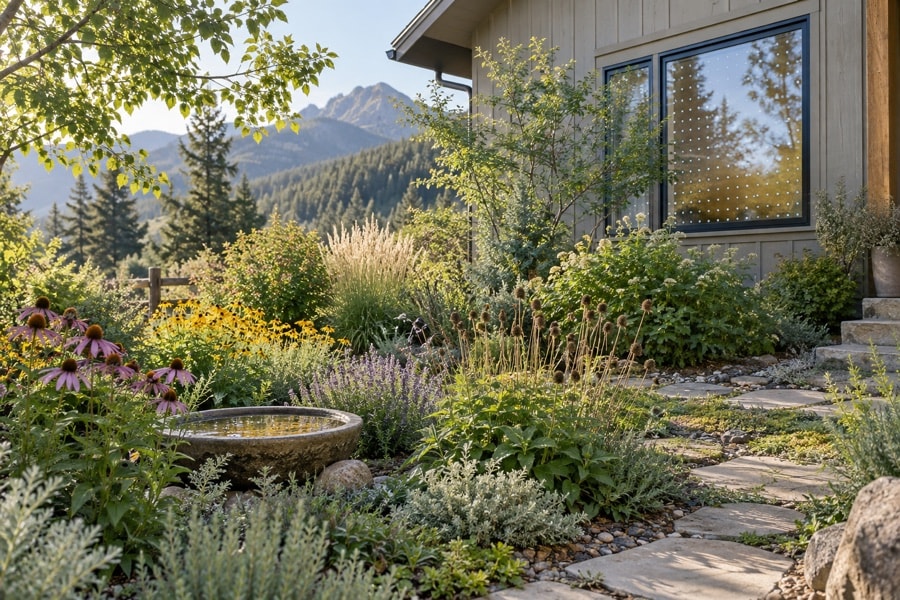
A bird-friendly yard is not defined by a single feeder or flower. It works as a small system: vegetation offers structure, fallen leaves shelter insects, water is kept clean, glass is made visible and household animals are kept from hunting wildlife.
Garden in layers
Think from the ground up. Leaf litter, low plants, shrubs and small or mature trees create different places to forage, shelter and move. Native plants are especially useful when they fit the site’s soil, moisture and light, but “native” is not a substitute for good placement. A sun plant crowded into deep shade will not build much habitat.
Start with what is already healthy. Add one layer that is missing rather than clearing the whole yard. Allow some stems and seed heads to remain through winter. Reduce the area managed as short turf where a more varied planting can thrive. Avoid invasive plants that escape cultivation and displace local vegetation.
Make glass look solid
Birds can strike windows when glass reflects sky and vegetation or appears to offer a clear passage. A single decorative silhouette is usually too sparse to define the full surface. Effective treatments create a close, repeated pattern across the exterior side of the glass so that the whole opening reads as a barrier.
Prioritize windows that mirror dense habitat, create a line of sight through a room, or have already been involved in a strike. Exterior screens, cords, films and suitable marker patterns can all change what a bird sees. The American Bird Conservancy glass guide explains the reflection problem and links to tested approaches.
Treat feeding as maintenance
If feeders are used, keep them clean, discard spoiled food and manage the ground below. Stop if the setup is concentrating sick birds or attracting animals that create conflict around the home. Food is optional; safe cover, clean water and reduced hazards are the more durable foundation.
Place any water feature where it can be cleaned easily. Shallow edges and a secure footing are more useful than an ornamental basin that cannot be maintained. Change the water regularly and scrub the vessel whenever a film develops.
Keep cats indoors or securely contained
Cats and wild birds should not share an unmanaged outdoor space. Indoor living, a fully enclosed outdoor structure or controlled time on a harness protects wildlife and keeps the cat away from traffic and other hazards. Bells and colorful collars do not replace containment. The American Bird Conservancy’s Cats Indoors resources provide further background.
Change one thing, then observe
A small garden can become a good place to practice field notes. Record which layer birds use, how long they remain and what changes after a planting matures. Do not turn a few visits into a sweeping claim. The value is in watching the relationship between structure and behavior over time.
Photograph the same view once or twice a year and keep a short list of changes: when a shrub first flowered, where water collected, which window treatment was added and when leaf cover became dense. This simple record helps separate seasonal change from the effect of a project. It can also prevent unnecessary replacement of plants that are establishing slowly but successfully. Patience is habitat work.