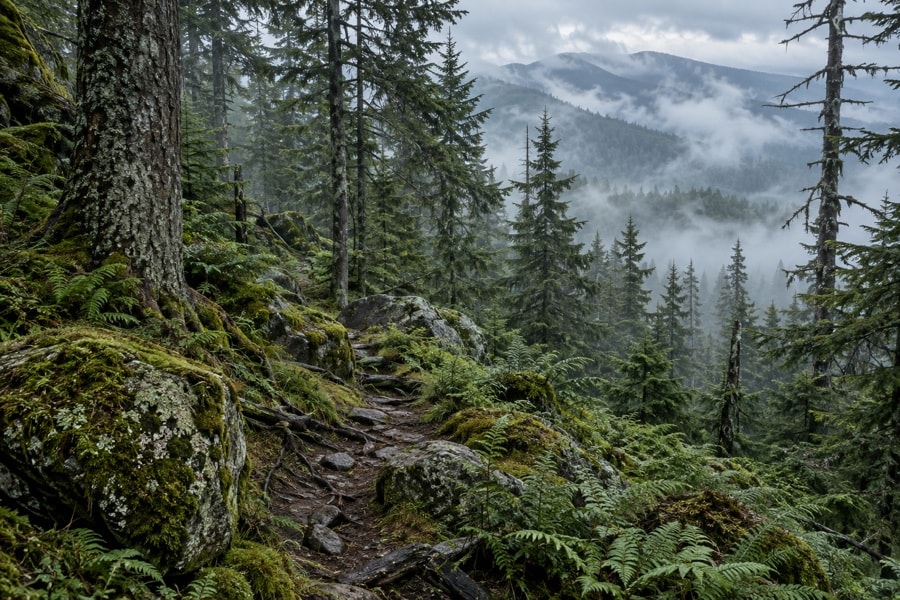
Western North Carolina is not one forest. Moist coves, open country, river corridors, suburban trees, mature hardwoods and high-elevation spruce-fir communities each support different parts of bird life. A species may use more than one of them over a day or a season. Protecting only the place where a bird is noticed can miss the larger system that made the encounter possible.
Start with habitat layers
Vegetation has structure from soil to canopy. Leaf litter shelters invertebrates. Shrubs provide cover and fruit. Midstory branches offer nesting and feeding space. Large trees hold cavities and a broad surface for foraging. Dead standing trees and fallen wood can remain ecologically active long after growth stops.
Uniform vegetation provides fewer choices than a varied stand, but complexity is not simply untidiness. The useful question is which structures are present, which are missing and how the site connects to the land around it.
Forests are always changing
Storms, insects, disease, development and management all alter a forest. Climate adds another pressure by changing temperature and moisture patterns, especially where high-elevation communities have nowhere higher to move. The National Park Service’s Blue Ridge Parkway forest overview describes the range of communities found along the mountain chain.
Change is not automatically good or bad for every bird. Openings may provide needed early-growth habitat, while other species depend on extensive mature forest. Conservation decisions need a defined place, a clear objective and monitoring over time. Broad slogans cannot substitute for that context.
Connections matter
A river edge, wooded neighborhood or saddle between ridges can link larger habitats. These connections help birds move during daily foraging and seasonal migration. They can also reduce the risk that one local disturbance isolates a population from every nearby refuge.
At a landscape scale, public lands and working lands both contribute. The North Carolina Wildlife Resources Commission provides game land management plans that show how goals, current conditions and proposed actions are described for particular properties. Read the plan for the land you are visiting rather than assuming one policy applies everywhere.
Observation can improve the picture
Bird records are most useful when effort and uncertainty are documented. Repeated observations made with comparable methods can help reveal changes that one memorable day cannot. Habitat notes add context: canopy condition, water level, recent disturbance and flowering or fruiting plants may explain what was detected.
Responsible birding is also a conservation practice. Stay on durable routes, limit disturbance near nests, keep sensitive locations appropriately general and follow posted land rules. The goal is a trustworthy observation that leaves the place functioning as it was found.